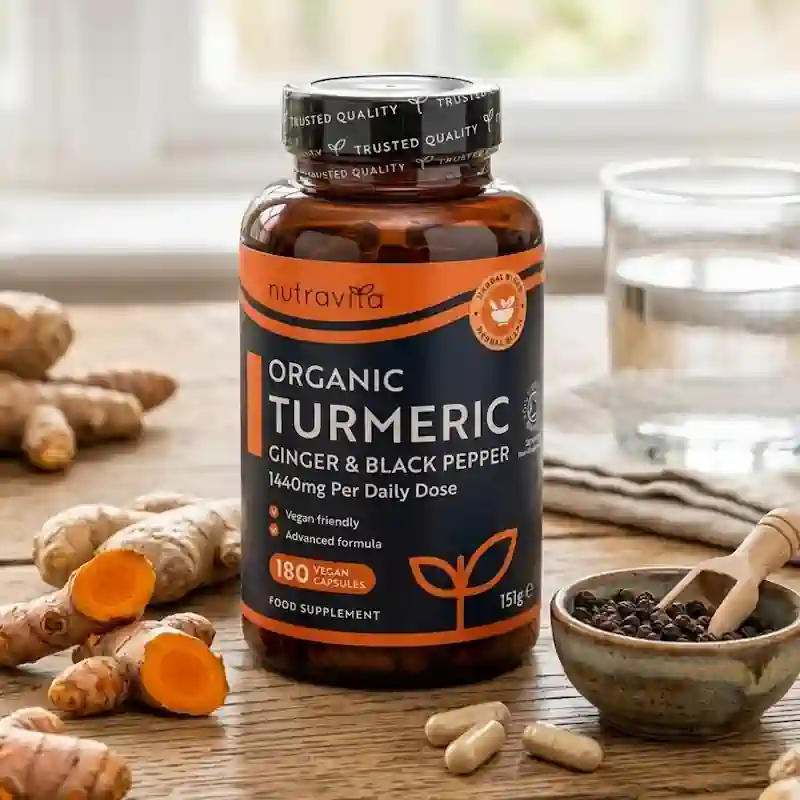
Turmeric
Review the scientific evidence and bio-availability of Turmeric, followed by our curated database of formulations.
Turmeric (Curcuma longa) is a perennial herbaceous plant of the Zingiberaceae (ginger) family native to the Indian subcontinent and Southeast Asia. Historically utilized for over 4,000 years in Ayurvedic and Traditional Chinese practices, it is characterized by its vibrant orange-yellow rhizome. The primary nutritional value of turmeric is derived from its curcuminoids, specifically curcumin, which serves as a pleiotropic molecule capable of interacting favorably with numerous molecular targets involved in natural cellular protection and metabolic homeostasis.
Clinical Benefits & Mechanism of Action
Turmeric functions primarily through the modulation of intracellular signaling pathways that support the body’s natural inflammatory response and metabolic balance. Its mechanisms include:
- Modulation of NF-κB: Curcumin assists in regulating the activation of Nuclear Factor kappa-light-chain-enhancer of activated B cells (NF-κB), a key regulatory protein pathway that coordinates the expression of cytokines such as TNF-α, IL-1, and IL-6, thereby supporting a healthy inflammatory baseline.
- Nrf2 Pathway Activation: It stimulates the Nuclear factor erythroid 2-related factor 2 (Nrf2) pathway, which increases the natural production of endogenous antioxidants like glutathione and superoxide dismutase, helping protect cells from oxidative stress.
- Support for COX-2 and LOX Pathways: Turmeric acts as a natural modulator of the cyclooxygenase-2 (COX-2) and lipoxygenase (LOX) enzymes, which are responsible for the synthesis of eicosanoids, thereby promoting overall tissue and musculoskeletal comfort.
- Glycemic and Insulin Support: Clinical evidence suggests that curcuminoids support healthy insulin sensitivity and normal glucose uptake by interacting with AMP-activated protein kinase (AMPK) and assisting regular hepatic glucose metabolism.
- Bioavailability Optimization: Because curcumin has low natural systemic bioavailability, it is frequently paired with piperine (a black pepper extract), which gently moderates the normal metabolic pathway (glucuronidation) to allow for enhanced nutrient absorption and utilization.
Scientific Sources & Clinical Trials
- Curcumin/Turmeric Supplementation on Glycemic Control in Adults With Prediabetes and Type 2 Diabetes: A Systematic Review and Dose-Response Meta-Analysis.
- Effects of Curcumin/Turmeric Supplementation on Kidney Function in Individuals With Diabetes: A Systematic Review and Meta-Analysis of Randomised Controlled Trials.
- Bioenhancer Assessment of Black Pepper with Turmeric on Self-Reported Pain Ratings in Adults: A Randomized, Cross-Over, Clinical Trial.