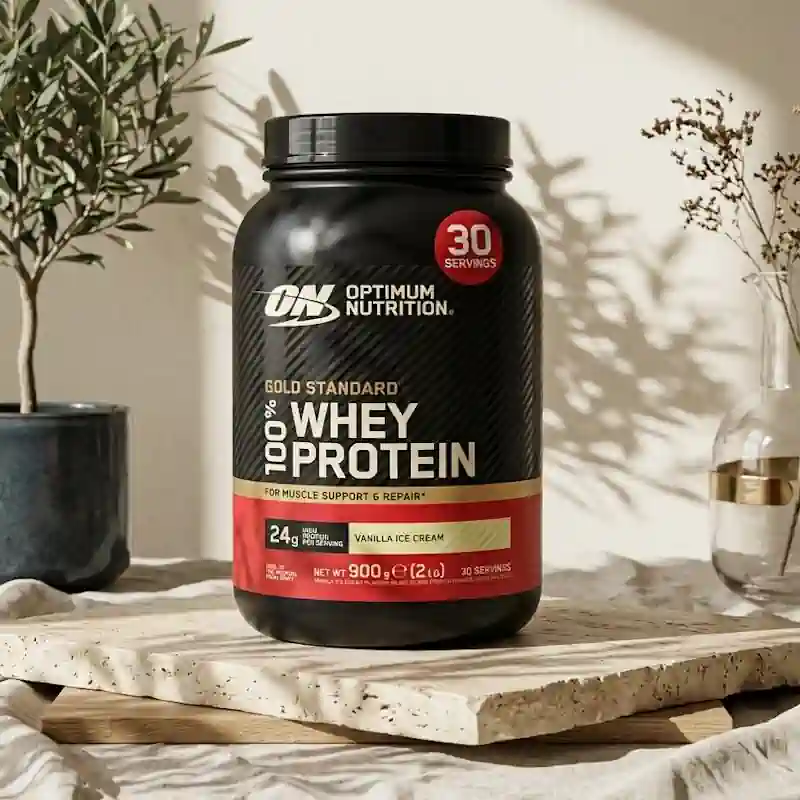
Whey Protein Isolate
Review the scientific evidence and bio-availability of Whey Protein Isolate, followed by our curated database of formulations.
Whey Protein Isolate (WPI) is a dietary protein source derived from the liquid byproduct of cheese manufacturing, specifically processed to remove the vast majority of lactose, minerals, and fats. Historically emerging as a gold standard in sports nutrition due to its superior bioavailability, WPI contains a protein concentration of 90% or higher. Unlike whey concentrate, the isolation process—often involving cross-flow microfiltration or ion exchange—results in a product that is rapidly absorbed by the gastrointestinal tract, providing an efficient post-ingestion spike in plasma amino acid levels.
Clinical Benefits & Mechanism of Action
The physiological efficacy of Whey Protein Isolate is primarily driven by its unique amino acid profile and digestion kinetics:
- mTOR Pathway Activation: WPI is exceptionally rich in Branched-Chain Amino Acids (BCAAs), particularly L-Leucine. Leucine acts as a primary signaling molecule that supports the activation of the Mechanistic Target of Rapamycin (mTORC1) complex, which is the fundamental trigger for skeletal muscle protein synthesis (MPS).
- Glutathione (GSH) Precursor Delivery: WPI contains high levels of the sulfur-containing amino acid Cysteine, specifically in the form of glutamylcysteine. This serves as a rate-limiting substrate for the natural synthesis of Glutathione, the body’s master endogenous antioxidant, which assists in managing oxidative stress and supporting optimal immune function.
- Bioactive Peptide Modulation: Beyond basic nitrogen balance, WPI contains functional fractions such as β-lactoglobulin, α-lactalbumin, and bovine serum albumin. These peptides help maintain a healthy, balanced microbial environment and can support the normal release of incretin hormones like GLP-1, contributing to healthy insulin sensitivity and efficient glucose disposal.
- Rapid Postprandial Hyperaminoacidemia: Because WPI does not coagulate in the acidic environment of the stomach (unlike casein), it facilitates a rapid “pulse” of essential amino acids (EAAs) into the bloodstream, making it highly effective for supporting recovery and preserving lean tissue after strenuous physical exertion.
Scientific Sources & Clinical Trials
- Increasing protein dose does not further augment muscle protein synthesis in critical illness: a randomized, controlled clinical trial.
- Anticancer Potential of Whey Proteins-A Systematic Review of Bioactivity and Functional Mechanisms.
- The Effect of Leucine-Enriched β-Lactoglobulin Versus an Isonitrogenous Whey Protein Isolate on Skeletal Muscle Protein Anabolism in Young Healthy Males.